Back
{2025-2026 · AI · Mobile · B2C}
{2025-2026 · AI · Mobile · B2C}
SelfWay App
SelfWay App
SelfWay App
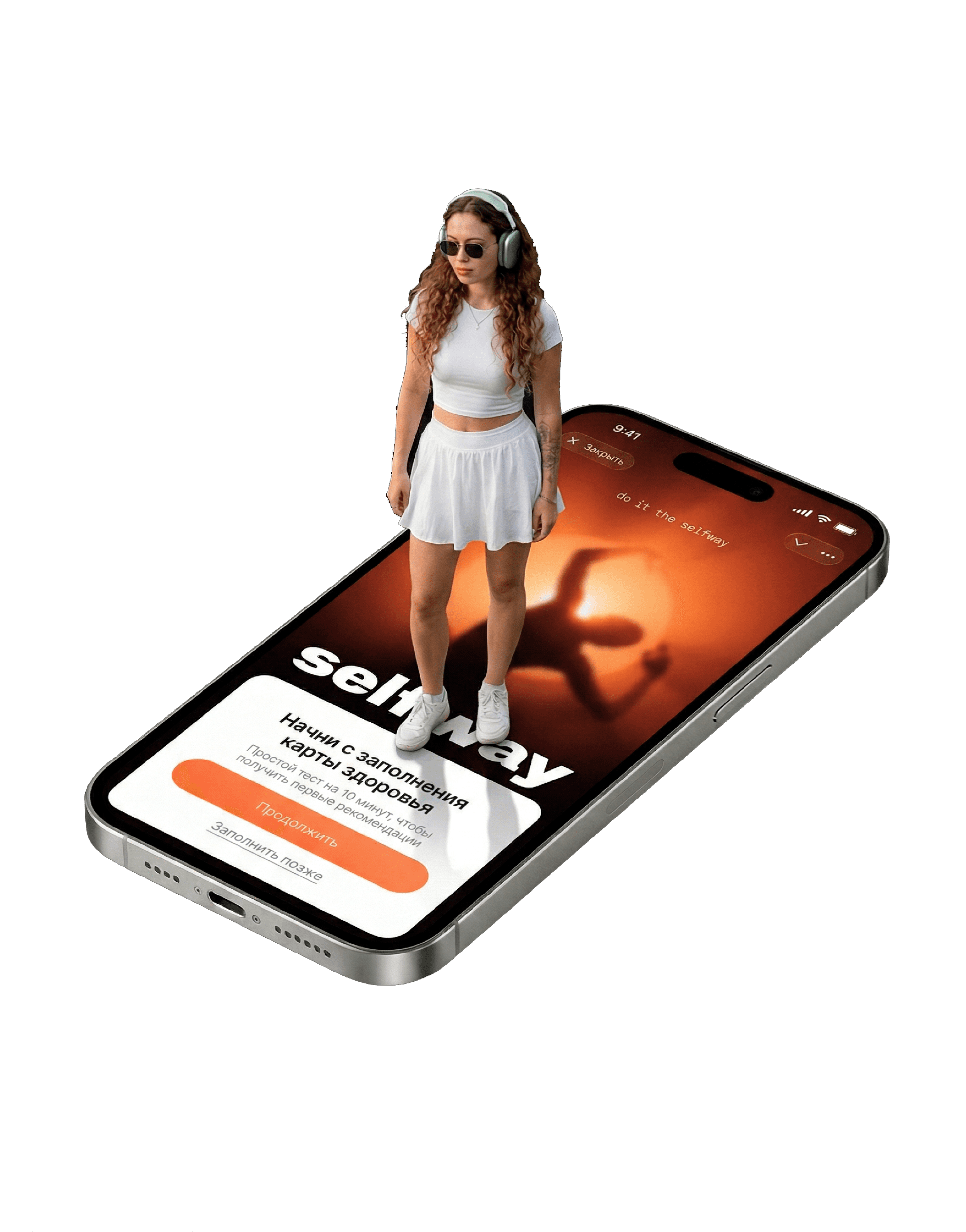
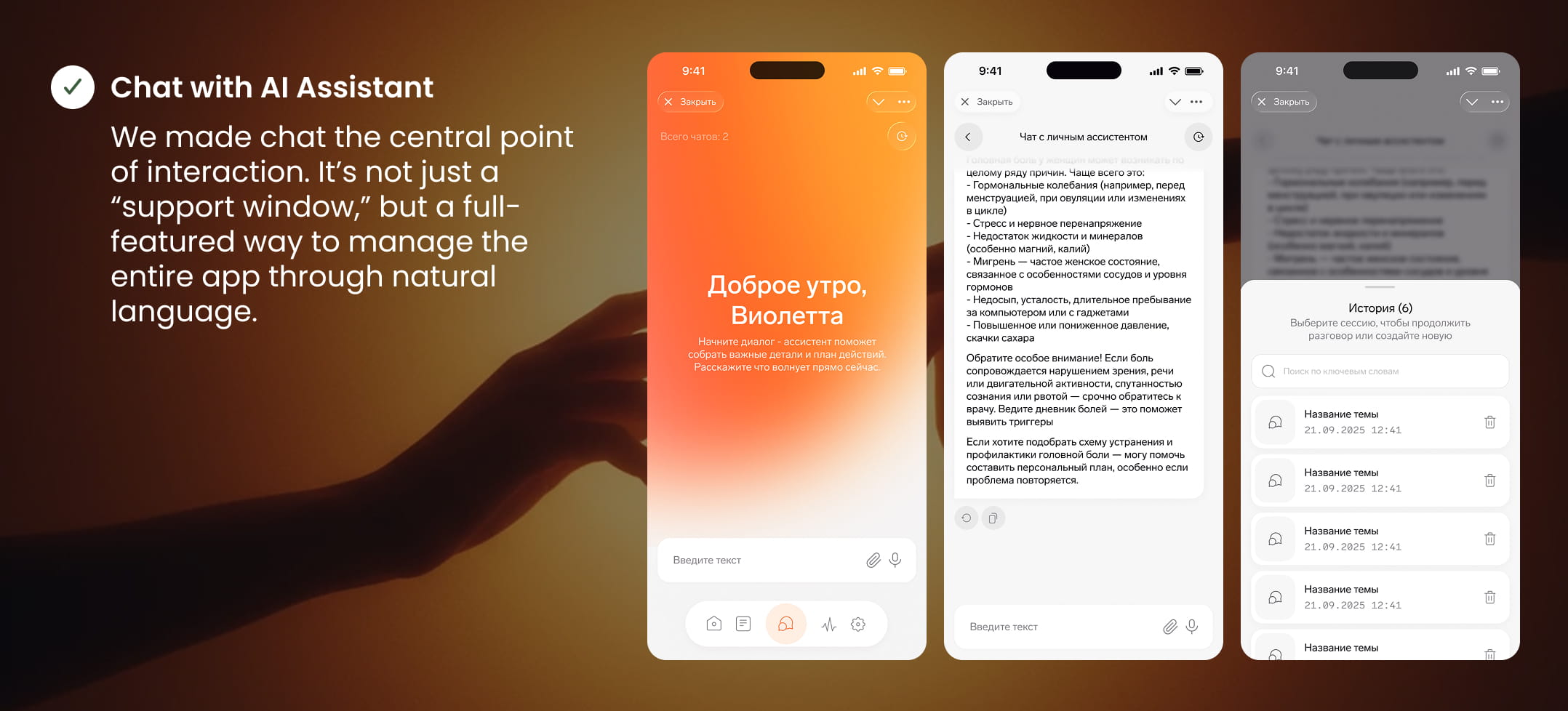
Selfway helps users regularly track their health. The app analyzes metrics, interprets lab results, and suggests when to see a doctor.
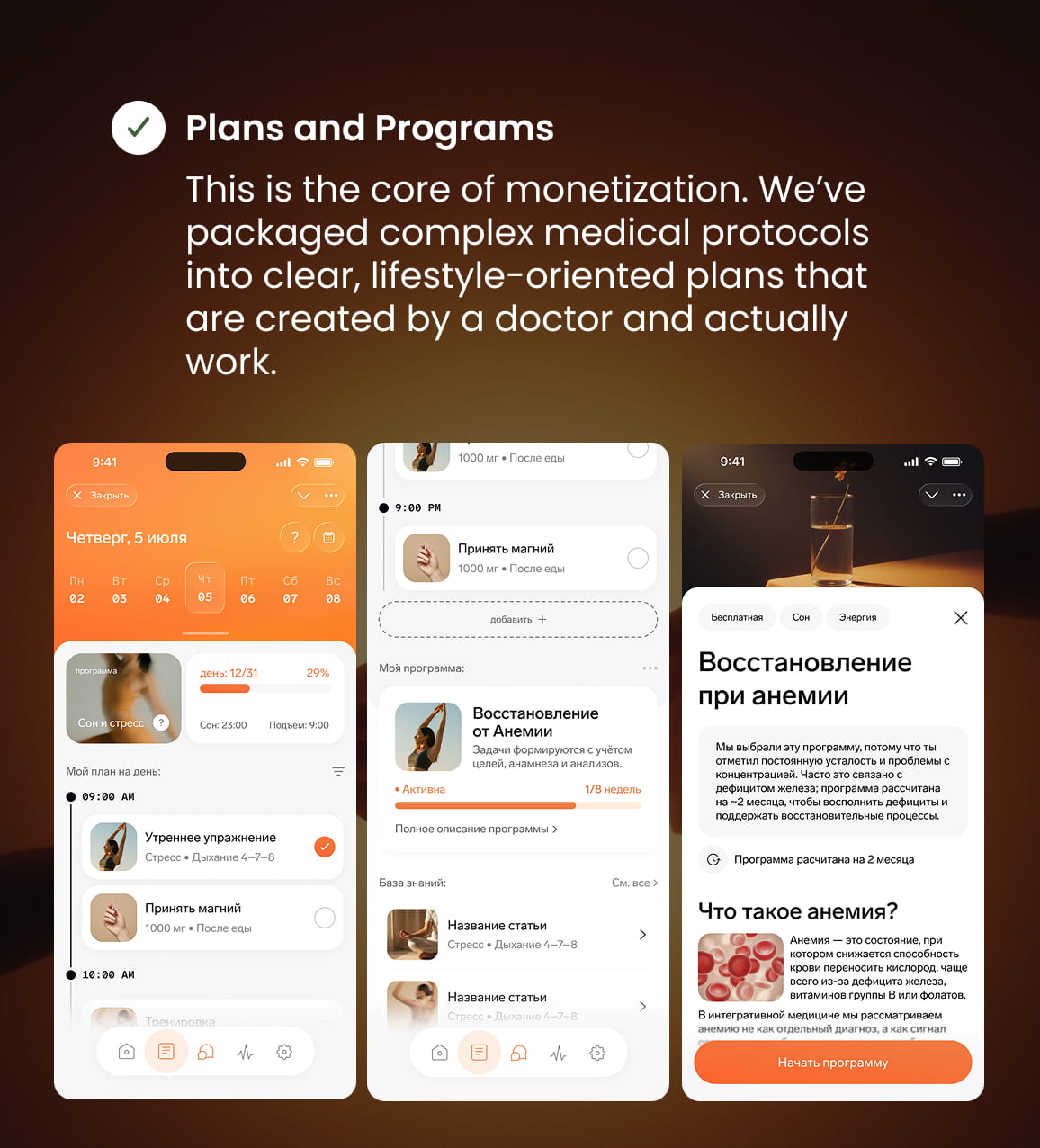
The core idea — turn complex medical data into a clear and useful recommendation system that a person can easily bring into their life.
Selfway helps users regularly track their health. The app analyzes metrics, interprets lab results, and suggests when to see a doctor.
The core idea — turn complex medical data into a clear and useful recommendation system that a person can easily bring into their life.
Context
Context
Context
I joined the project during the active development phase.
I joined the project during the active development phase.
I joined the project during the active development phase.
My job: connect it all into a coherent product ready for launch.
My job: My job:connect it all into a coherent product ready for launch.
From what I started with:
From what I started with:
— the product idea was already defined
— some user flows existed
— the interface consisted of disconnected screens with no system behind them
— there was no design system
— the product idea was already defined
— some user flows existed
— the interface consisted of disconnected screens with no system behind them
— there was no design system

Task
Task
Task
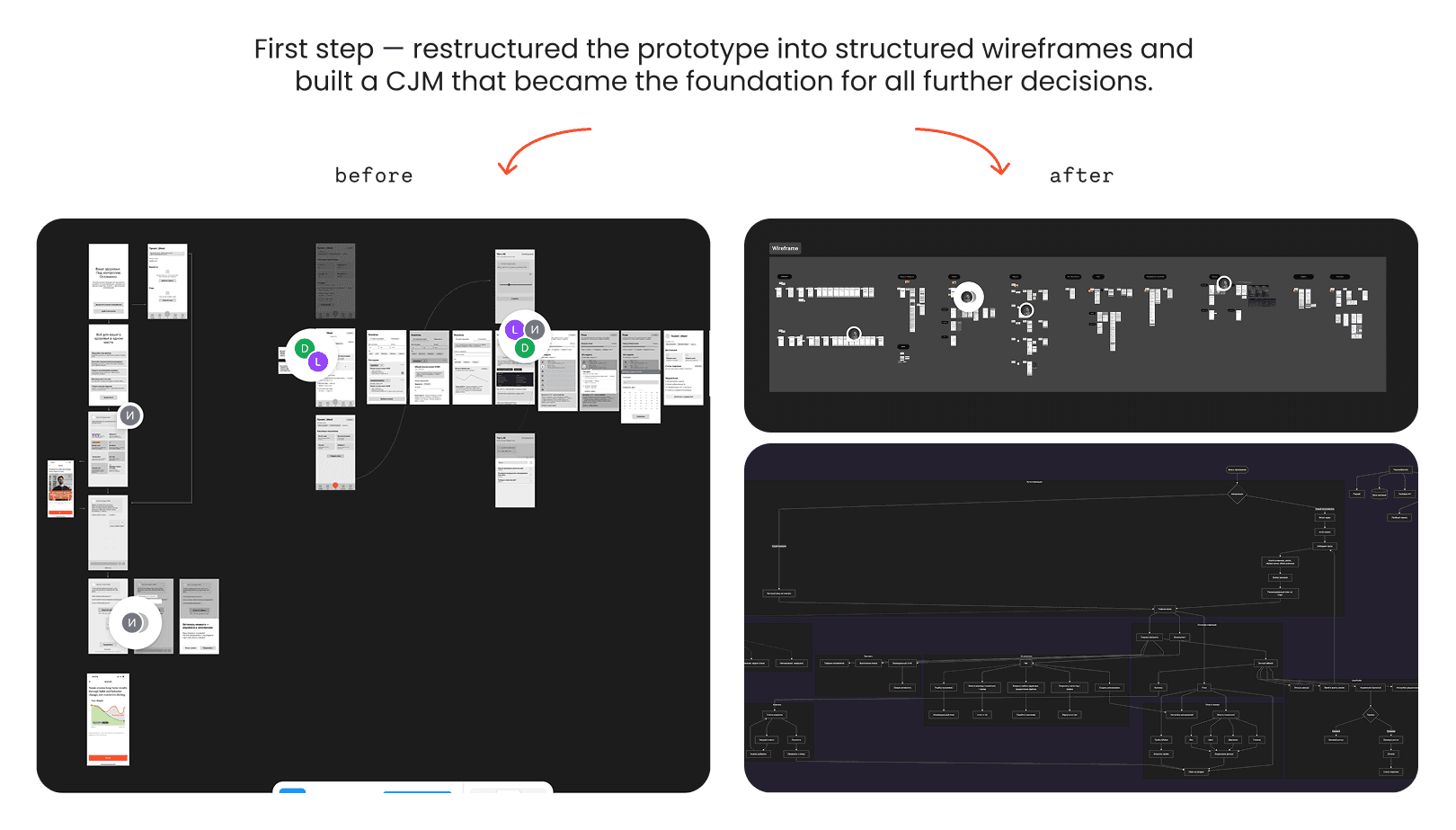
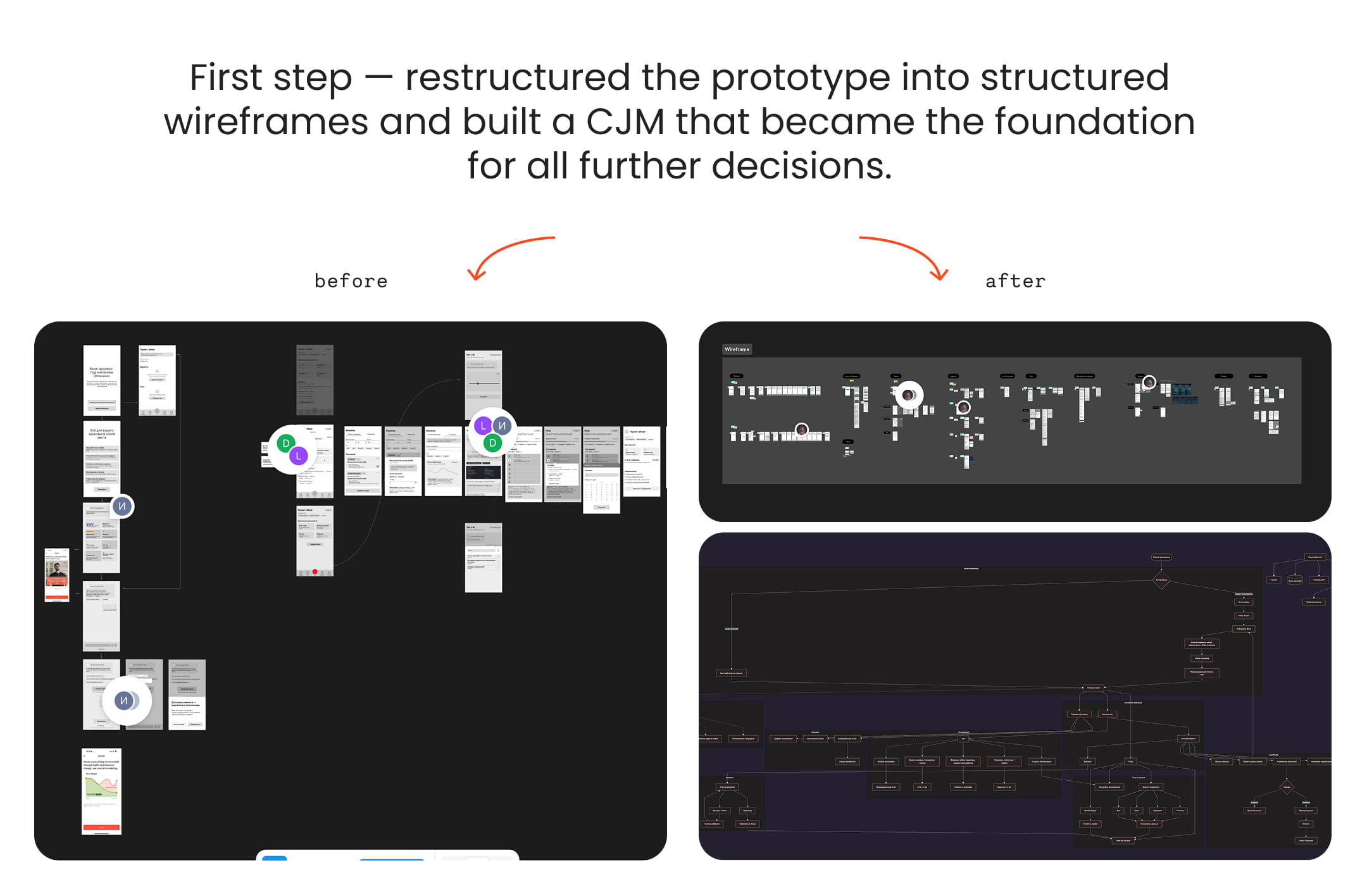
— Build CJM and design app architecture from scratch
— Conduct research: user interviews and competitive analysis
— Reach onboarding completion rate of 60%
— Achieve 3–4% conversion to paid at MVP stage
— Build visual concept based on existing brand guidelines
— Assemble UI kit and design tokens for development
— Iterate on design in close collaboration with developers
— Build CJM and design app architecture from scratch
— Conduct research: user interviews and competitive analysis
— Reach onboarding completion rate of 60%
— Achieve 3–4% conversion to paid at MVP stage
— Build visual concept based on existing brand guidelines
— Assemble UI kit and design tokens for development
— Iterate on design in close collaboration with developers
— Build CJM and design app architecture from scratch
— Conduct research: user interviews and competitive analysis
— Reach onboarding completion rate of 60%
— Achieve 3–4% conversion to paid at MVP stage
— Build visual concept based on existing brand guidelines
— Assemble UI kit and design tokens for development
— Iterate on design in close collaboration with developers
My Role
My Role
My Role
— Lead UX/UI designer on the project
— Ran a product audit, interviewed 20 users and analyzed 10+ competitors, formulated hypotheses
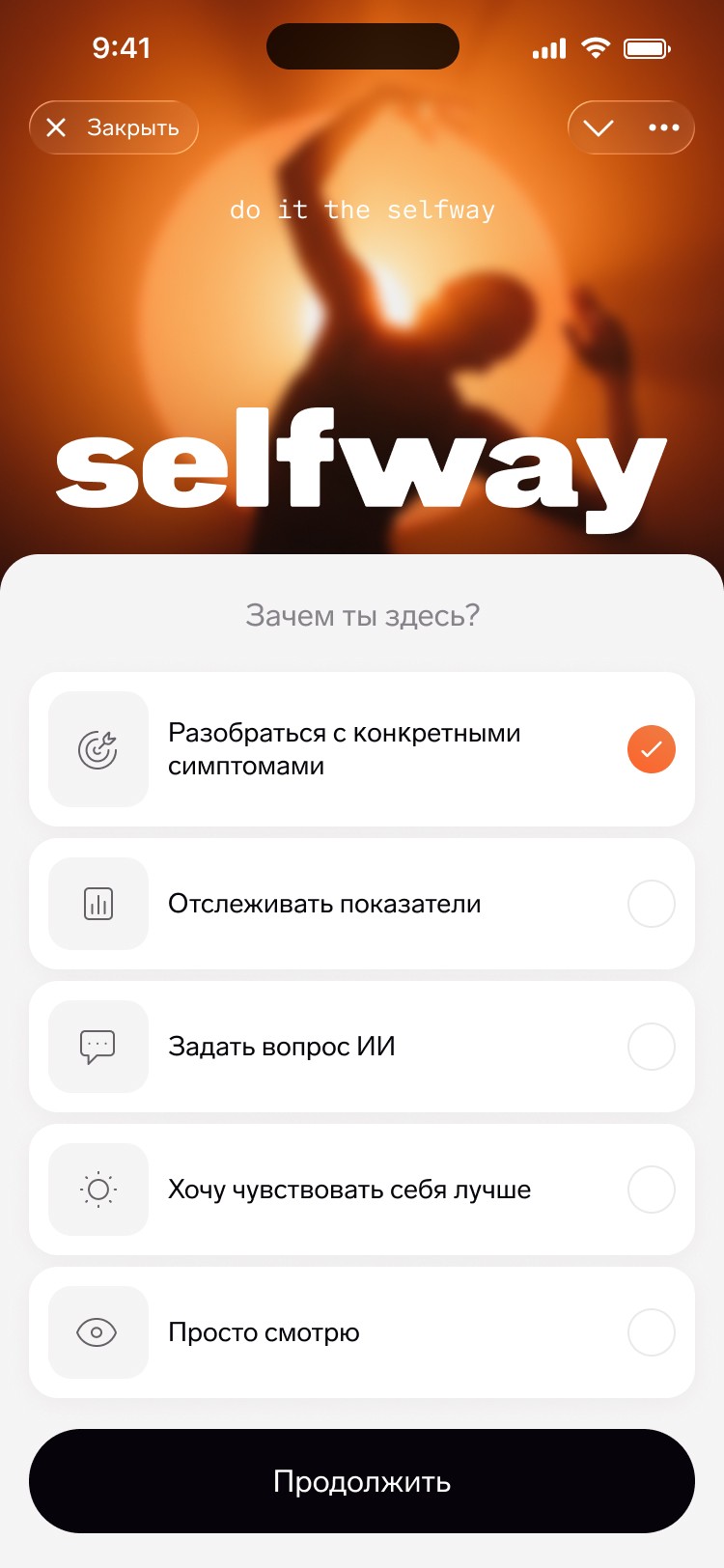
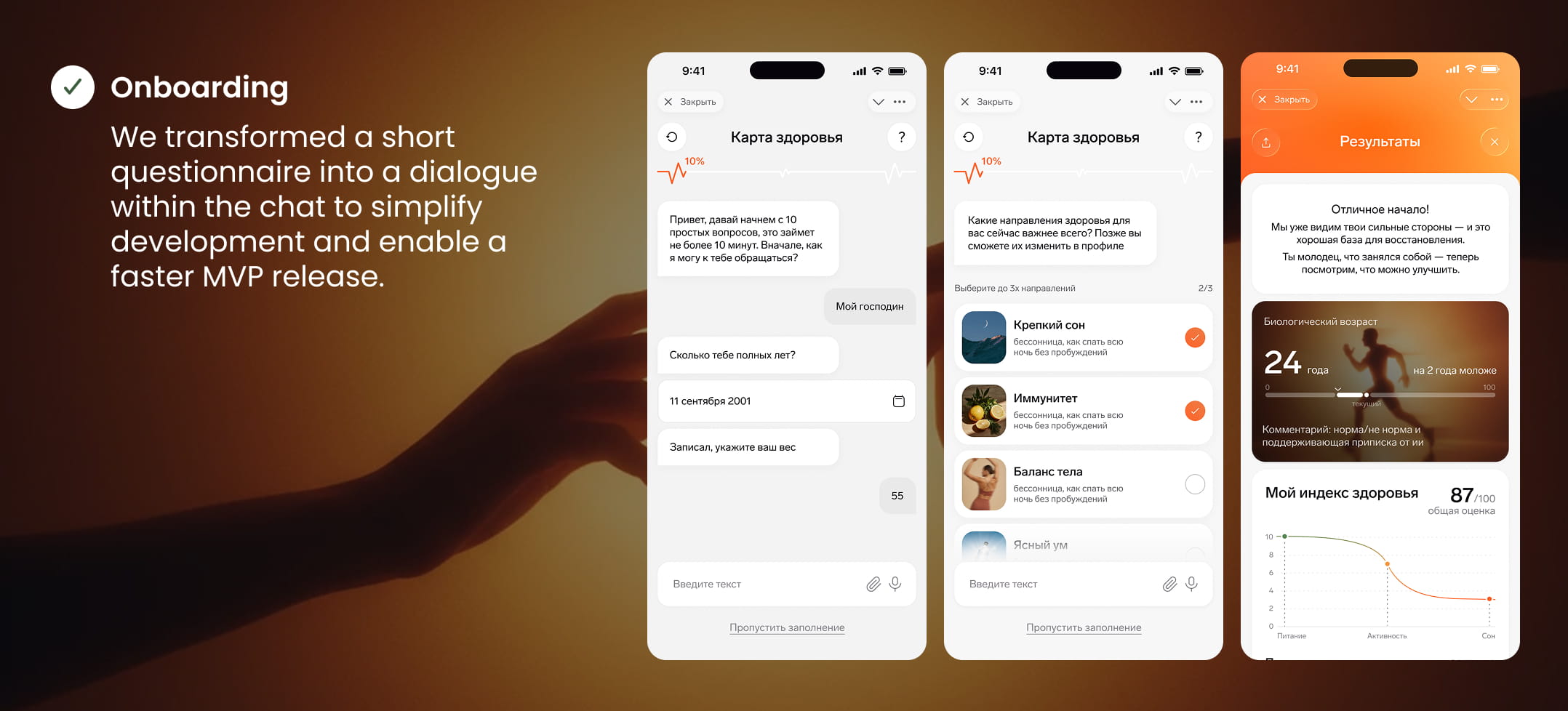
— Designed user flows and onboarding
— Prepared several design concepts and presented the solution to the team
— Built UI kit, tokens and design system together with the brand designer
— Designed all interface states and prepared the product for MVP release
— Iterated on solutions in close collaboration with developers
— Lead UX/UI designer on the project
— Ran a product audit, interviewed 20 users and analyzed 10+ competitors, formulated hypotheses
— Designed user flows and onboarding
— Prepared several design concepts and presented the solution to the team
— Built UI kit, tokens and design system together with the brand designer
— Designed all interface states and prepared the product for MVP release
— Iterated on solutions in close collaboration with developers
— Lead UX/UI designer on the project
— Ran a product audit, interviewed 20 users and analyzed 10+ competitors, formulated hypotheses
— Designed user flows and onboarding
— Prepared several design concepts and presented the solution to the team
— Built UI kit, tokens and design system together with the brand designer
— Designed all interface states and prepared the product for MVP release
— Iterated on solutions in close collaboration with developers
Success Criteria
Success Criteria
Success Criteria
— Onboarding completion rate — 60%+
— Conversion to paid — 3–4% at MVP stage
— Regular return and engagement with the product
— High DAU/MAU ratio for AI chat
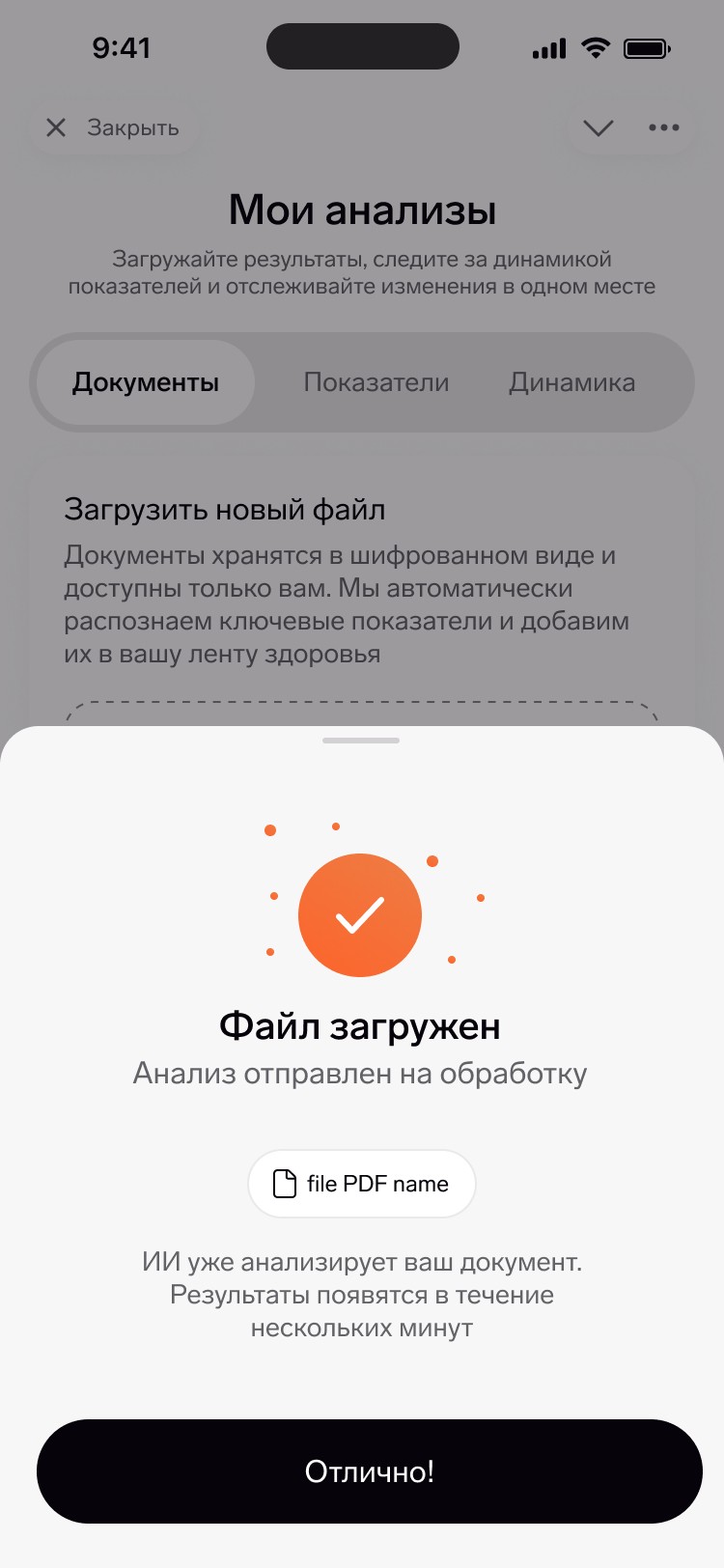
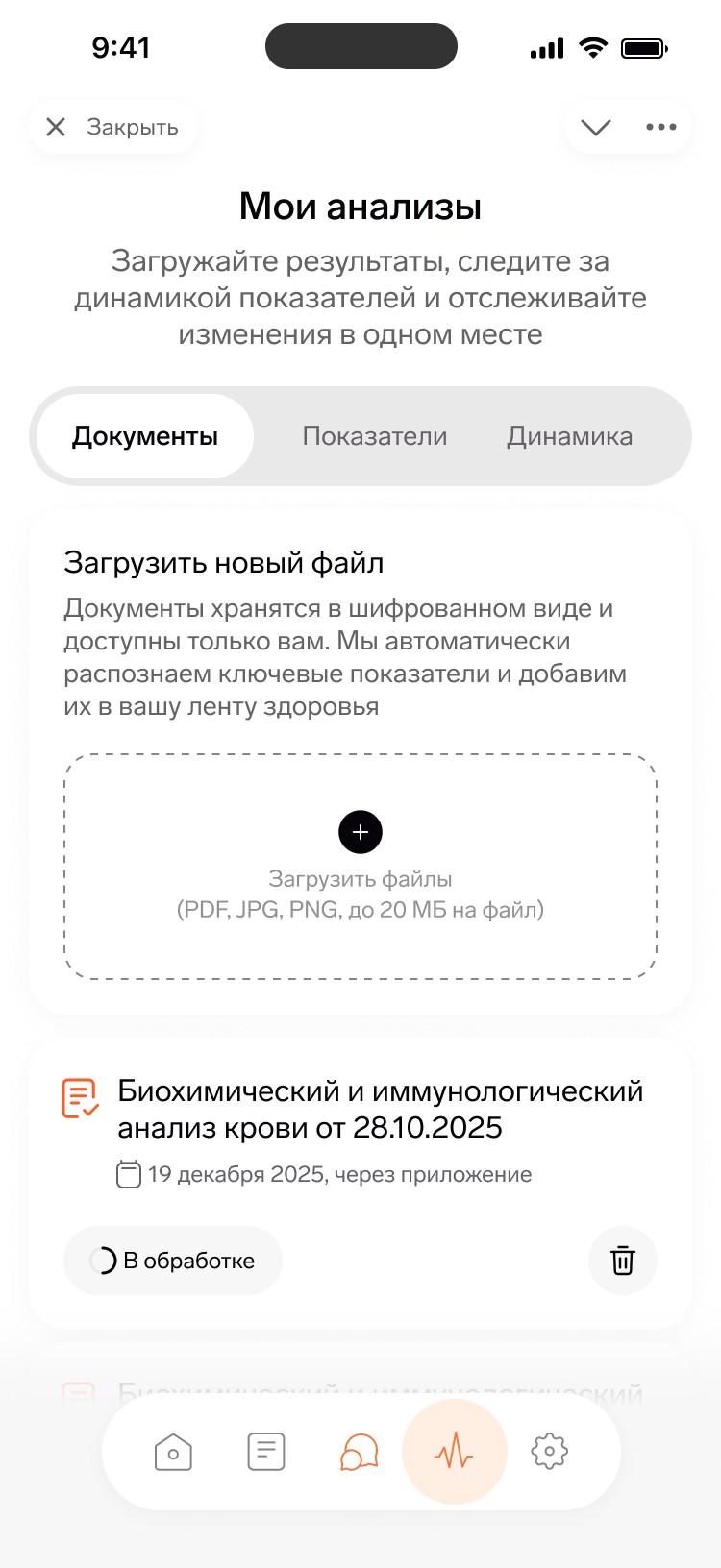
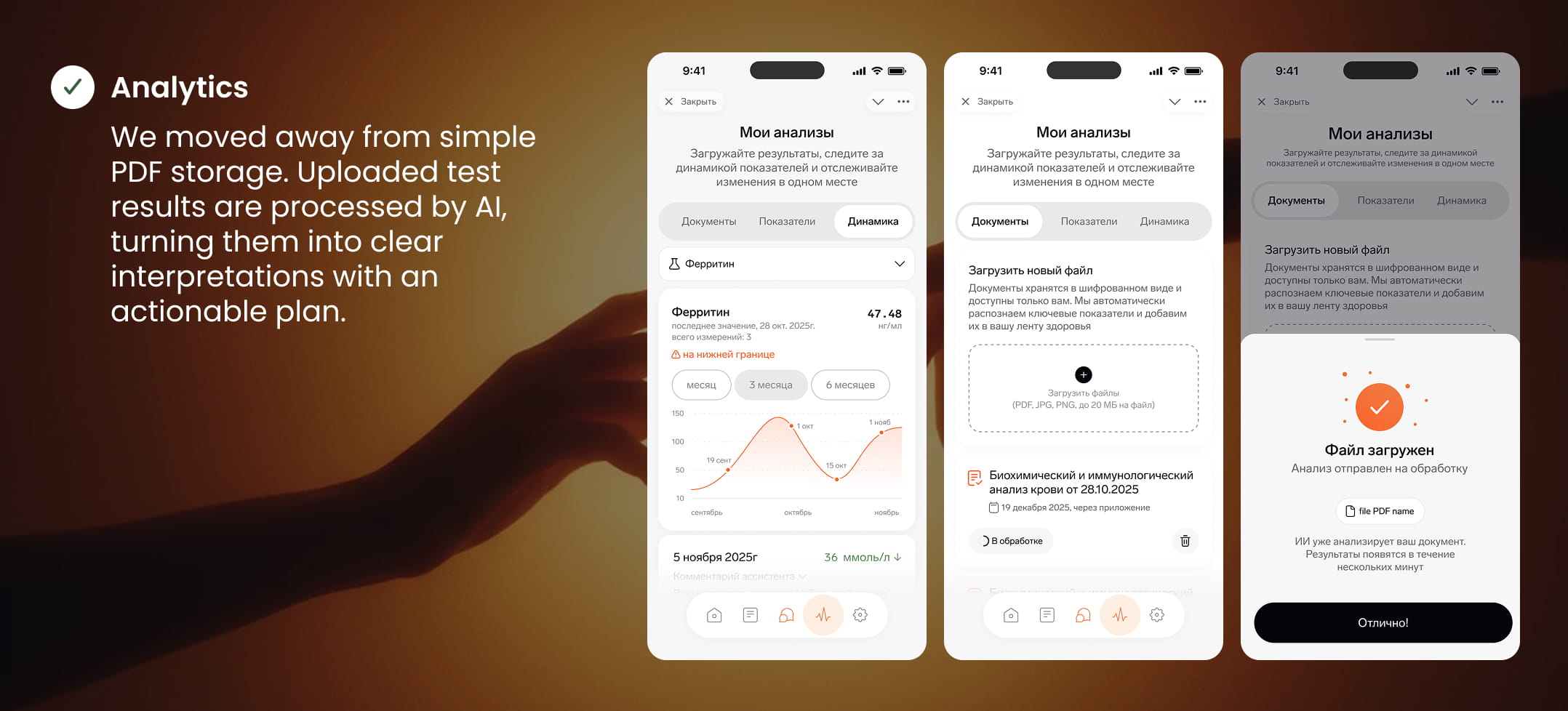
— Users upload lab results and receive interpretation
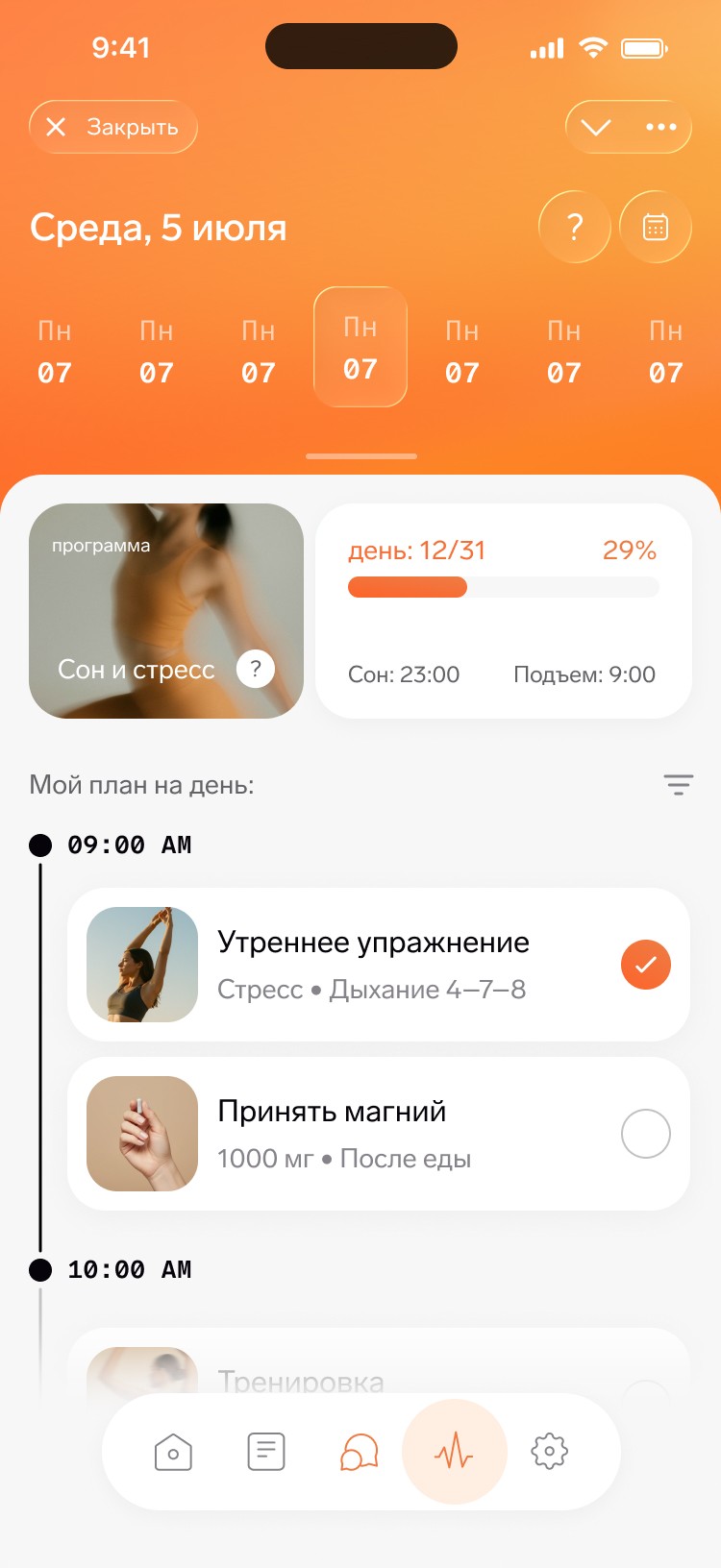
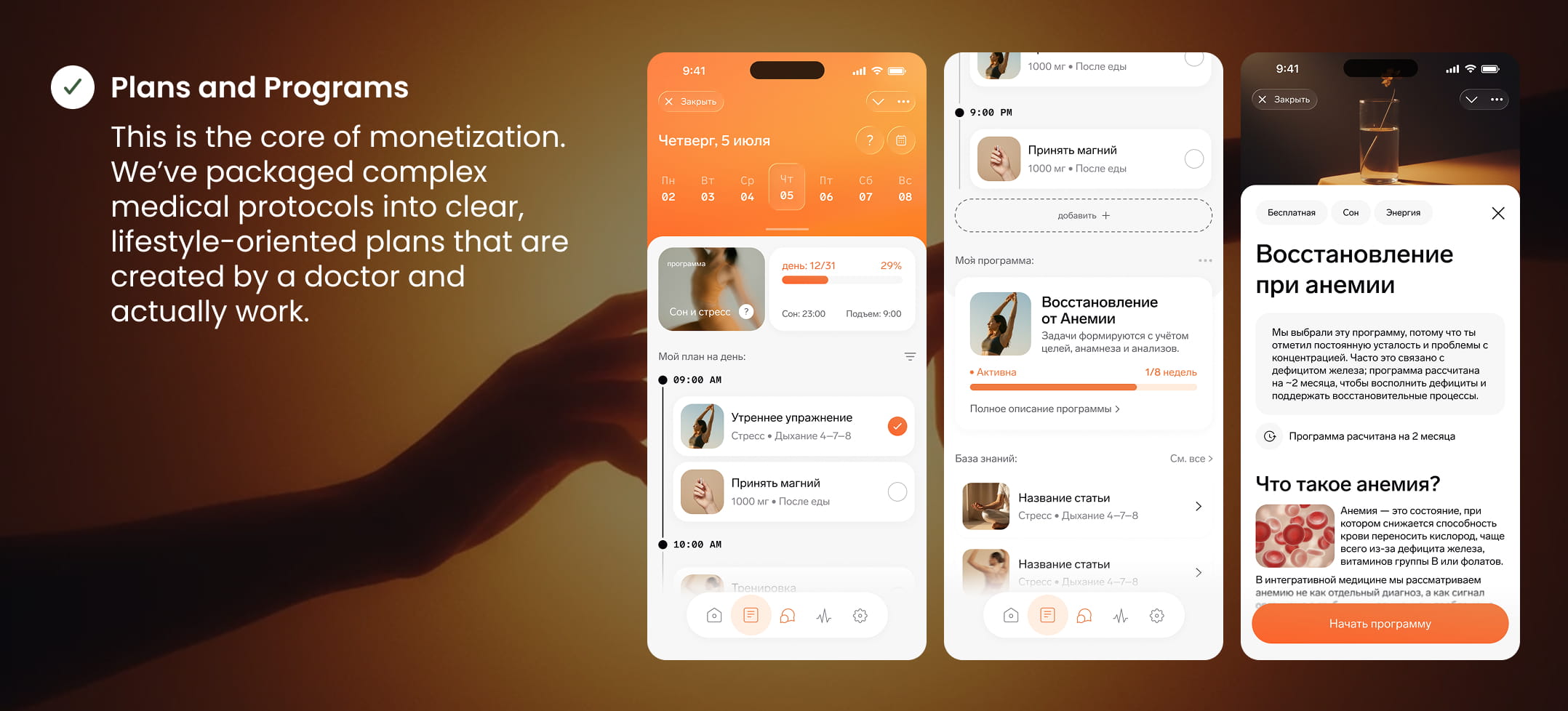
— Users explore and convert to paid programs
— Onboarding completion rate — 60%+
— Conversion to paid — 3–4% at MVP stage
— Regular return and engagement with the product
— High DAU/MAU ratio for AI chat
— Users upload lab results and receive interpretation
— Users explore and convert to paid programs
— Onboarding completion rate — 60%+
— Conversion to paid — 3–4% at MVP stage
— Regular return and engagement with the product
— High DAU/MAU ratio for AI chat
— Users upload lab results and receive interpretation
— Users explore and convert to paid programs
Results
Results
Results
~74%
~74%
completed onboarding
completed onboarding
~50%
~50%
engaged with AI chat
engaged with AI chat
~3%
~3%
converted to paid
converted to paid
All metrics are being refined. Focus group data shows users find the programs clear and the chat and lab interpretation easy to use
All metrics are being refined. Focus group data shows users find the programs clear and the chat and lab interpretation easy to use
All metrics are being refined. Focus group data shows users find the programs clear and the chat and lab interpretation easy to use
Research
Research
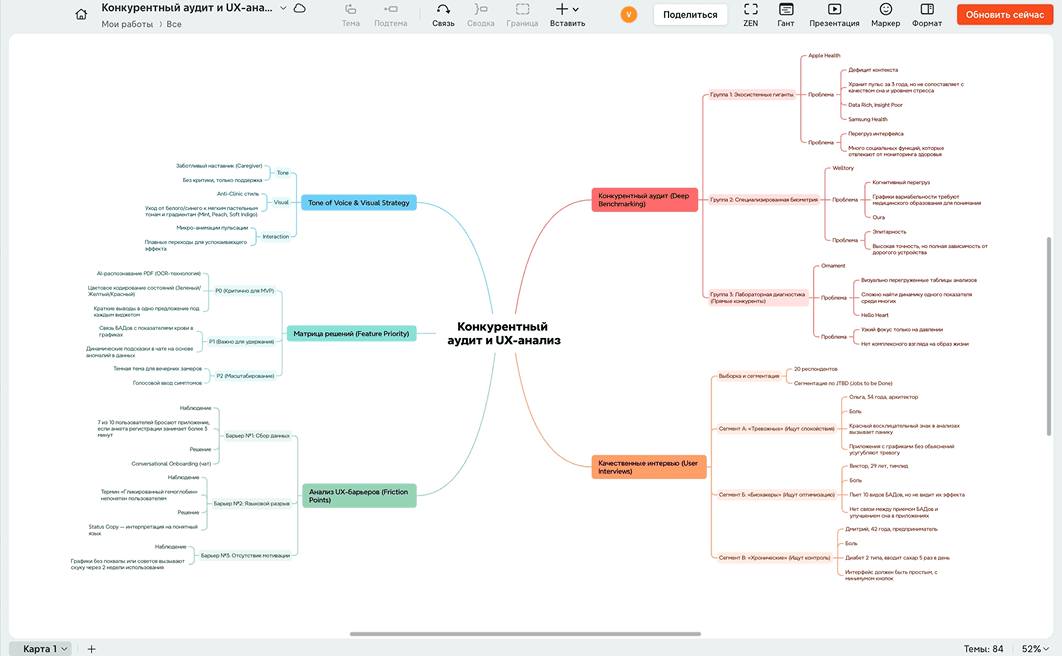
Ran competitive benchmarking across 10+ apps — from Apple Health to niche solutions. Conducted interviews with 20 potential users.
Ran competitive benchmarking across 10+ apps — from Apple Health to niche solutions. Conducted interviews with 20 potential users.
Ran competitive benchmarking across 10+ apps — from Apple Health to niche solutions. Conducted interviews with 20 potential users.
The key insight: people don't use health apps regularly not because of bad interfaces. They leave because they don't know what to do with what the app gives them. This shifted our focus — we weren't designing a convenient data interface, we were building a tool that speaks the user's language.
The key insight: people don't use health apps regularly not because of bad interfaces. They leave because they don't know what to do with what the app gives them. This shifted our focus — we weren't designing a convenient data interface, we were building a tool that speaks the user's language.
The key insight: people don't use health apps regularly not because of bad interfaces. They leave because they don't know what to do with what the app gives them. This shifted our focus — we weren't designing a convenient data interface, we were building a tool that speaks the user's language.
Problem
Problem
Most people don't track their health — not because they don't want to, but because it's hard. Health data is contradictory, terminology is intimidating, and there's no time to figure it all out. Easier to put it off.
Most people don't track their health — not because they don't want to, but because it's hard. Health data is contradictory, terminology is intimidating, and there's no time to figure it all out. Easier to put it off.
Most people don't track their health — not because they don't want to, but because it's hard. Health data is contradictory, terminology is intimidating, and there's no time to figure it all out. Easier to put it off.
What this means for the product:
What this means for the product:
What this means for the product:
What this means for the product:
What this means for the product:
What this means for the product:
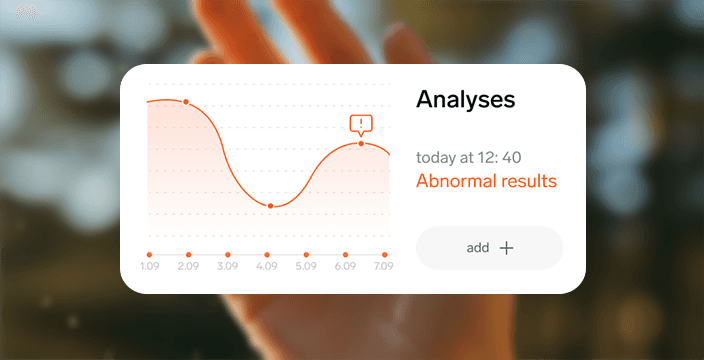
Instead of passive data, users need immediate context in plain language
Instead of passive data, users need immediate context in plain language
Instead of passive data, users need immediate context in plain language
What this means for the product:
What this means for the product:
What this means for the product:
Instead of passive data, users need immediate context in plain language
Instead of passive data, users need immediate context in plain language
Instead of passive data, users need immediate context in plain language
What this means for the product:
What this means for the product:
What this means for the product:
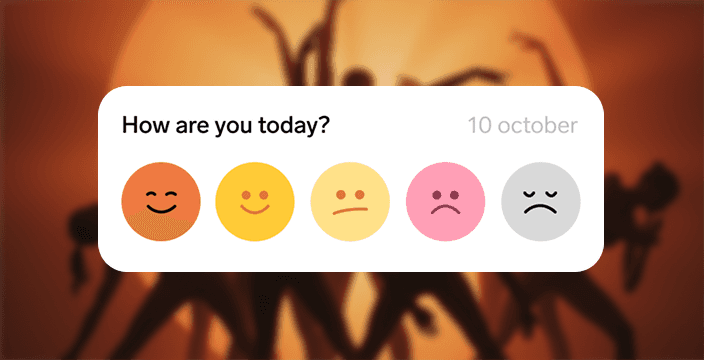
No medical jargon — the app's TOV is warm and supportive
No medical jargon — the app's TOV is warm and supportive
No medical jargon — the app's TOV is warm and supportive
What this means for the product:
What this means for the product:
What this means for the product:
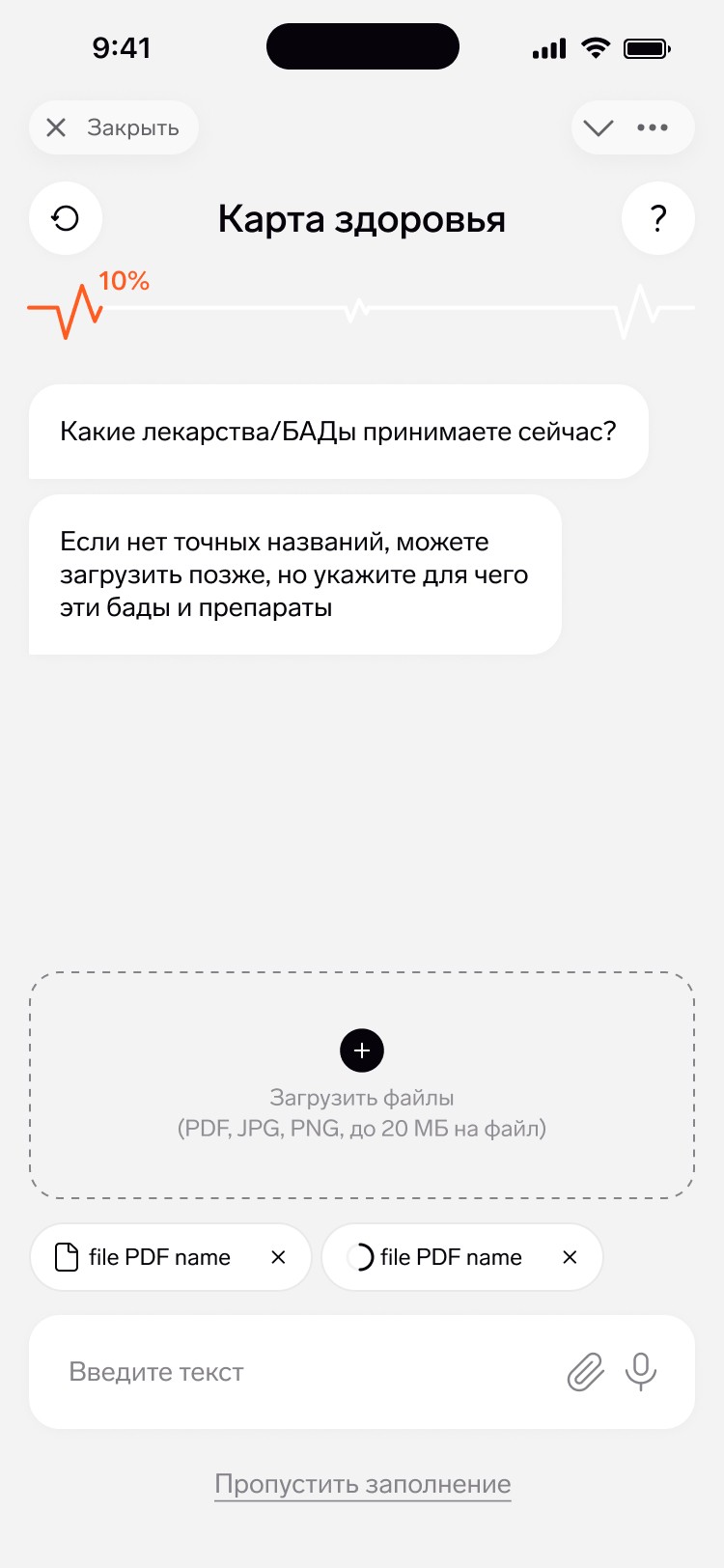
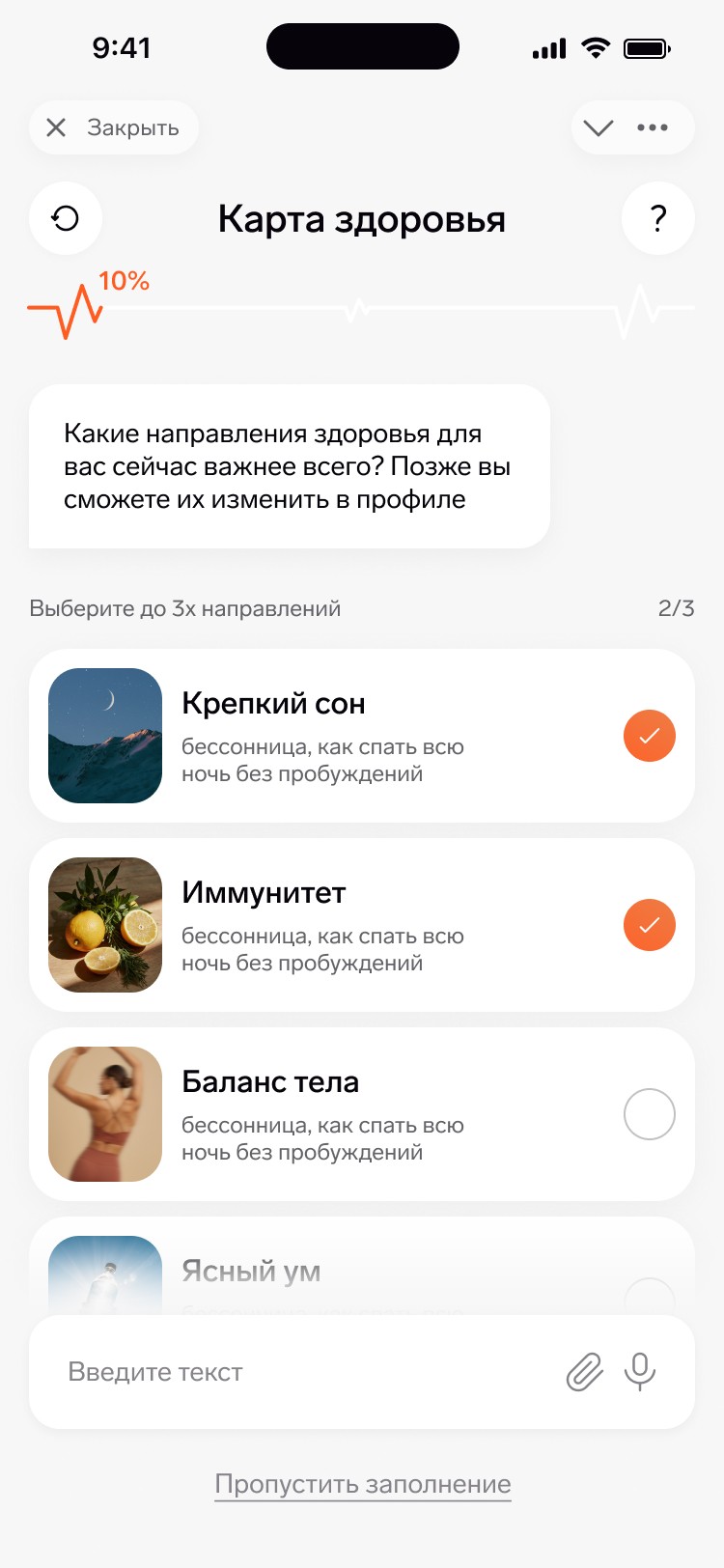
Give users space and choice — the AI assistant fills in the gaps
Give users space and choice — the AI assistant fills in the gaps
Give users space and choice — the AI assistant fills in the gaps
Moodboard
Moodboard
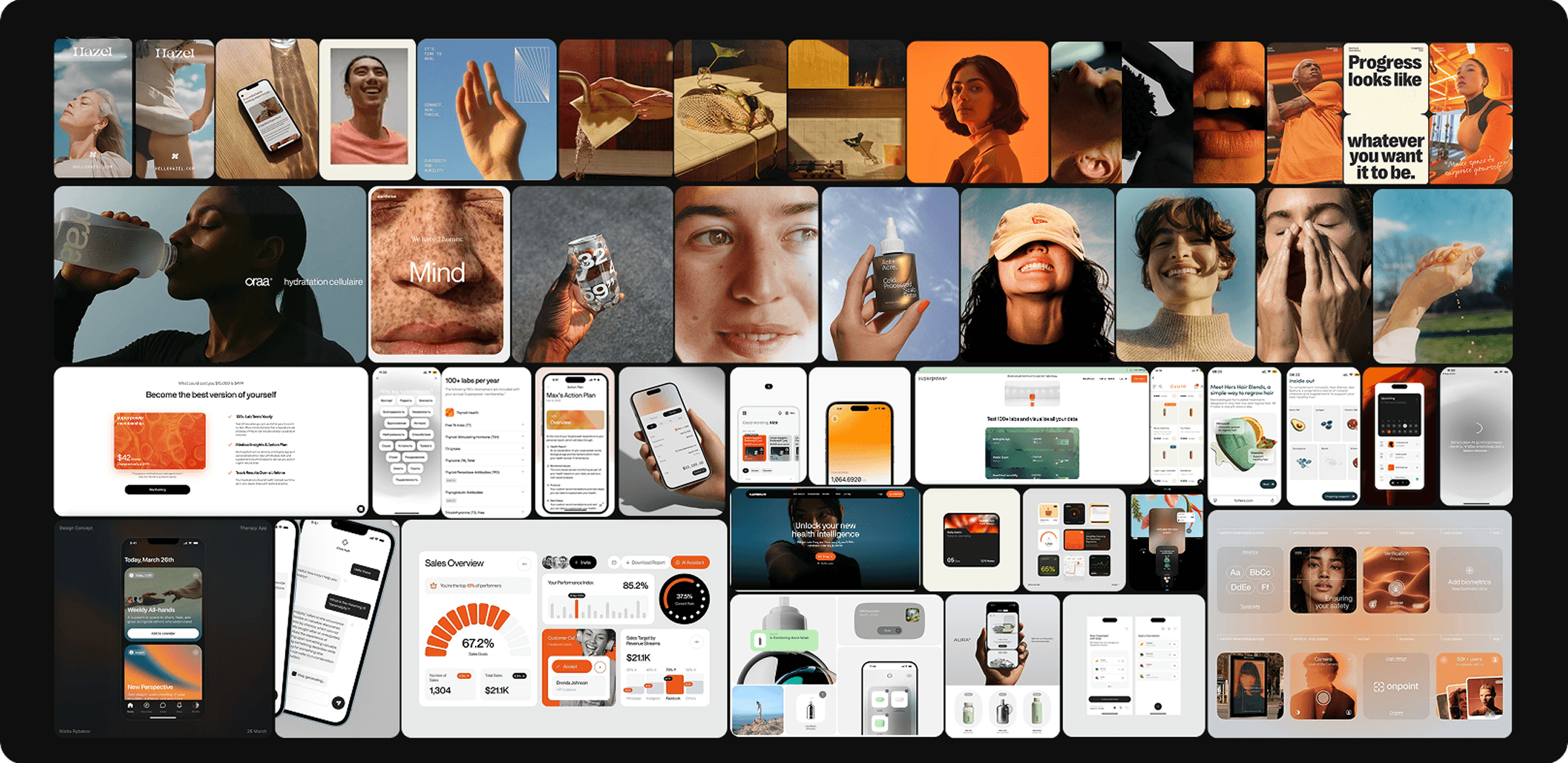
Before starting, I worked with the brand designer to gather visual references — health apps, interaction patterns, tone. We were looking for a balance between energy, movement, and warmth — without overwhelming the user.
Before starting, I worked with the brand designer to gather visual references — health apps, interaction patterns, tone. We were looking for a balance between energy, movement, and warmth — without overwhelming the user.
Before starting, I worked with the brand designer to gather visual references — health apps, interaction patterns, tone. We were looking for a balance between energy, movement, and warmth — without overwhelming the user.
Solutions
Solutions
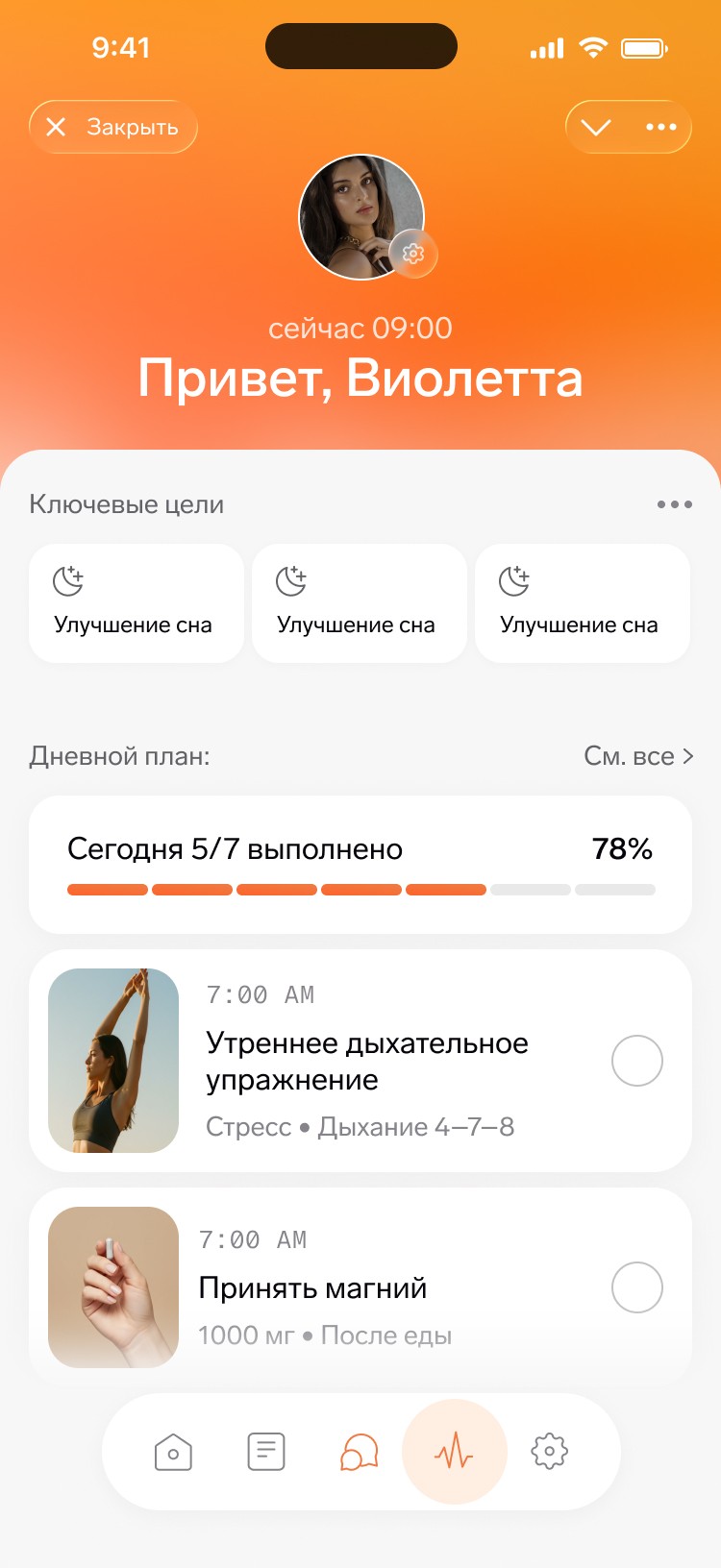
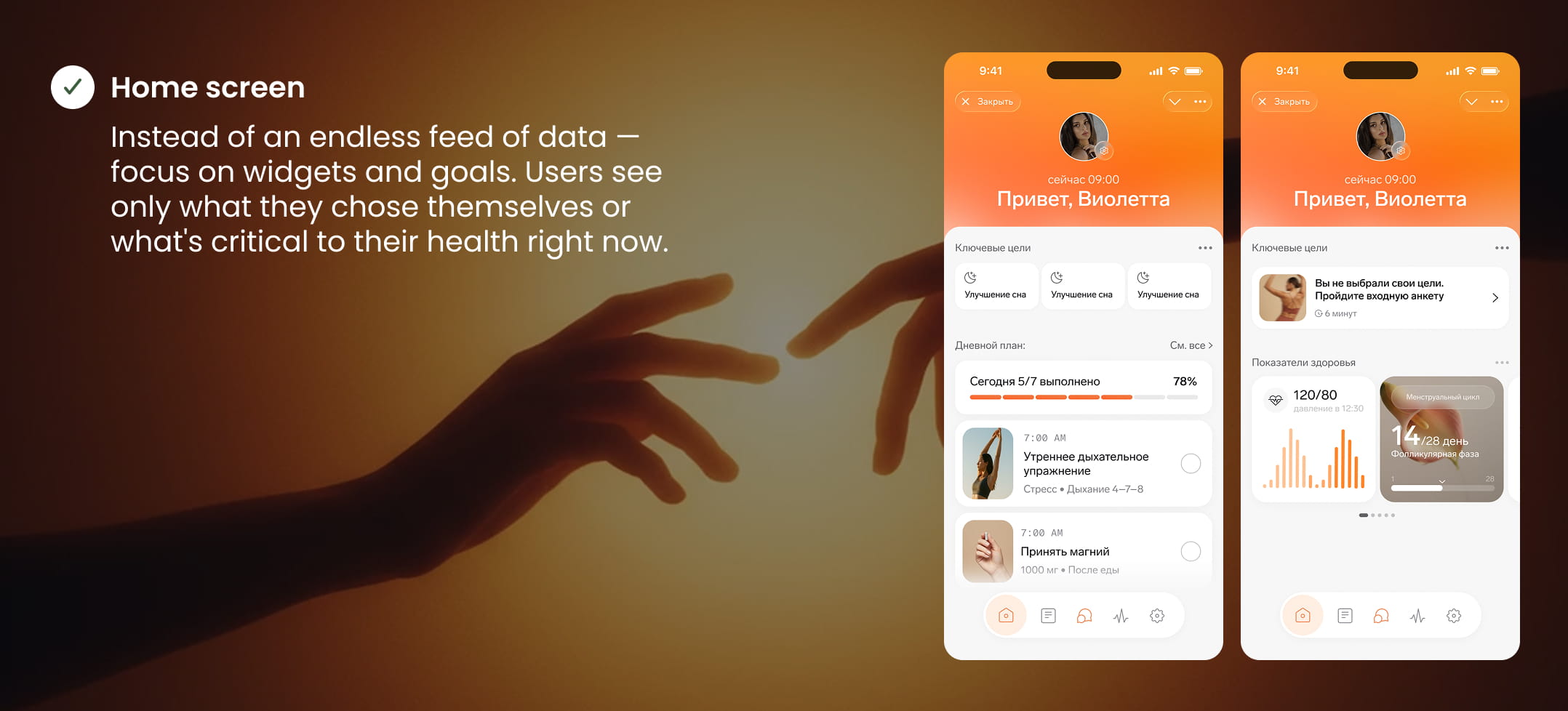
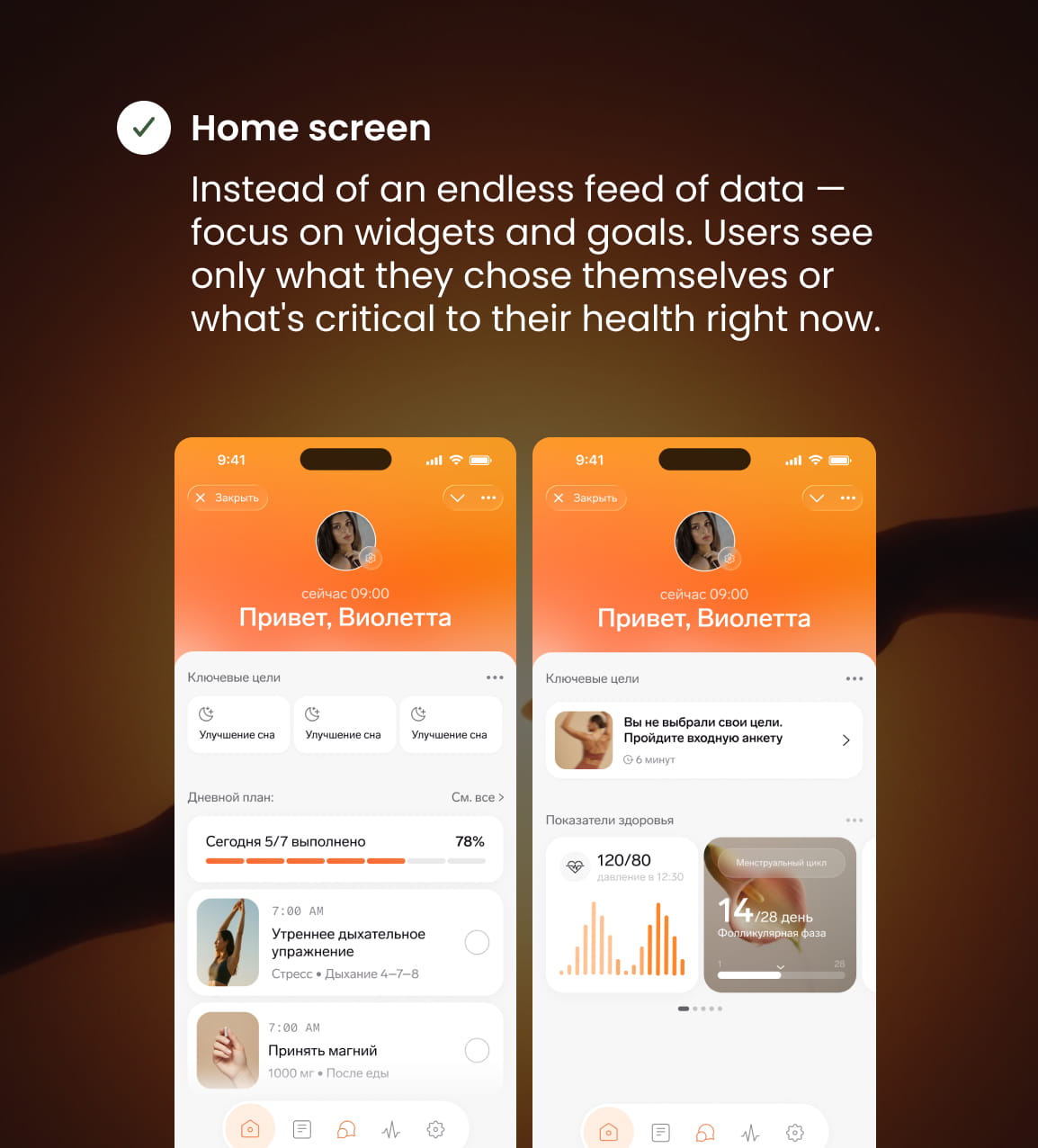
At the start, the team wanted to show a lot of metrics at once on the home screen.
At the start, the team wanted to show a lot of metrics at once on the home screen.
At the start, the team wanted to show a lot of metrics at once on the home screen.
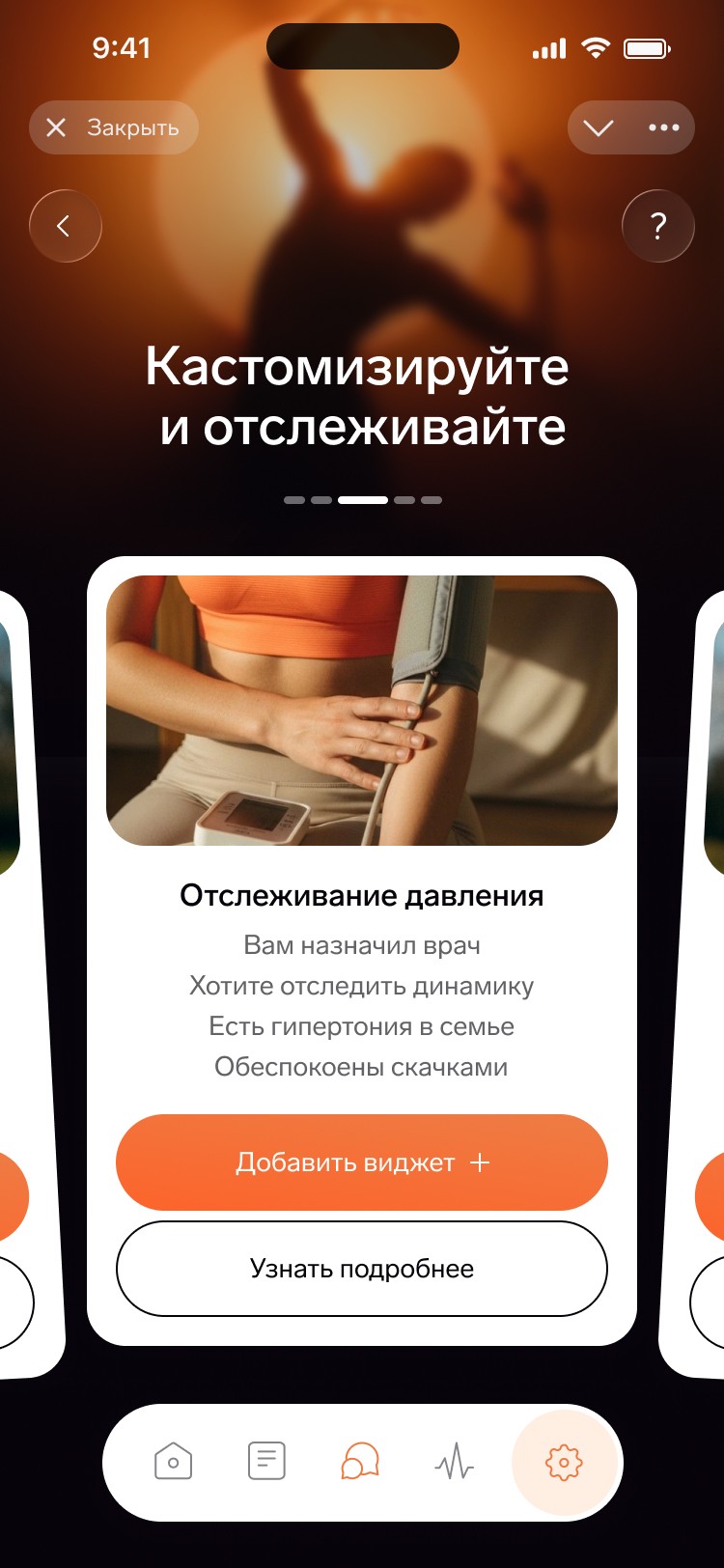
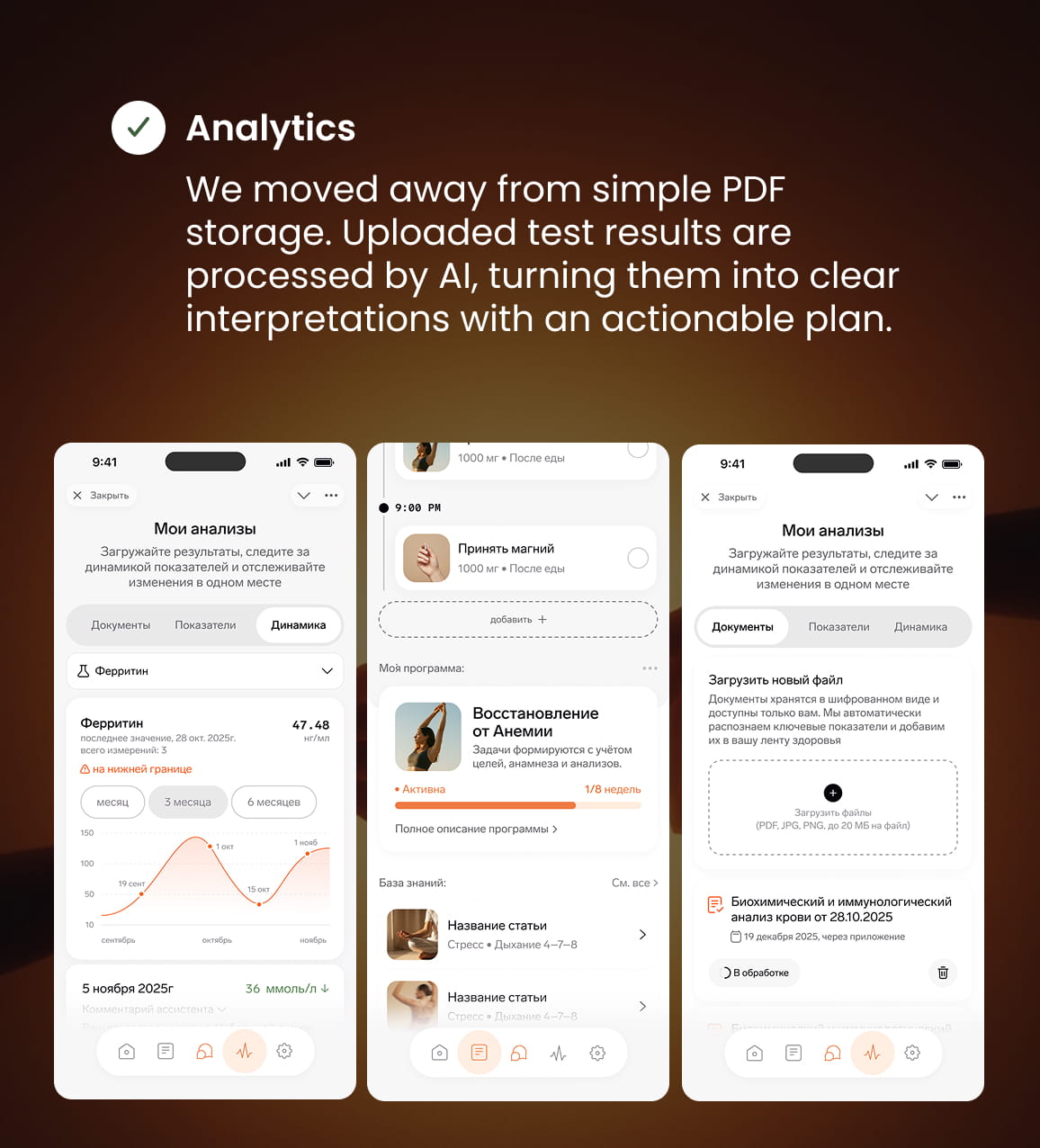
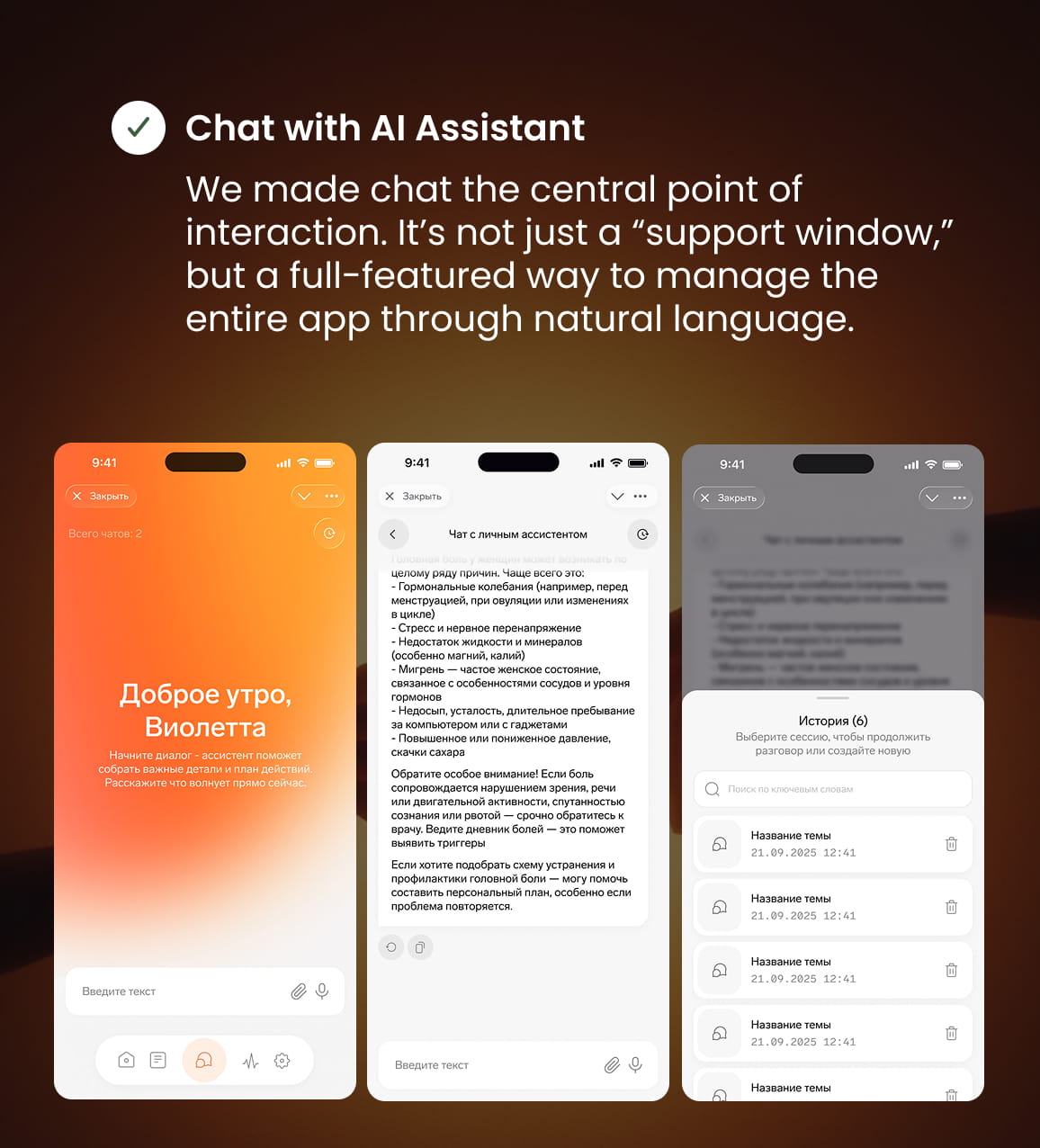
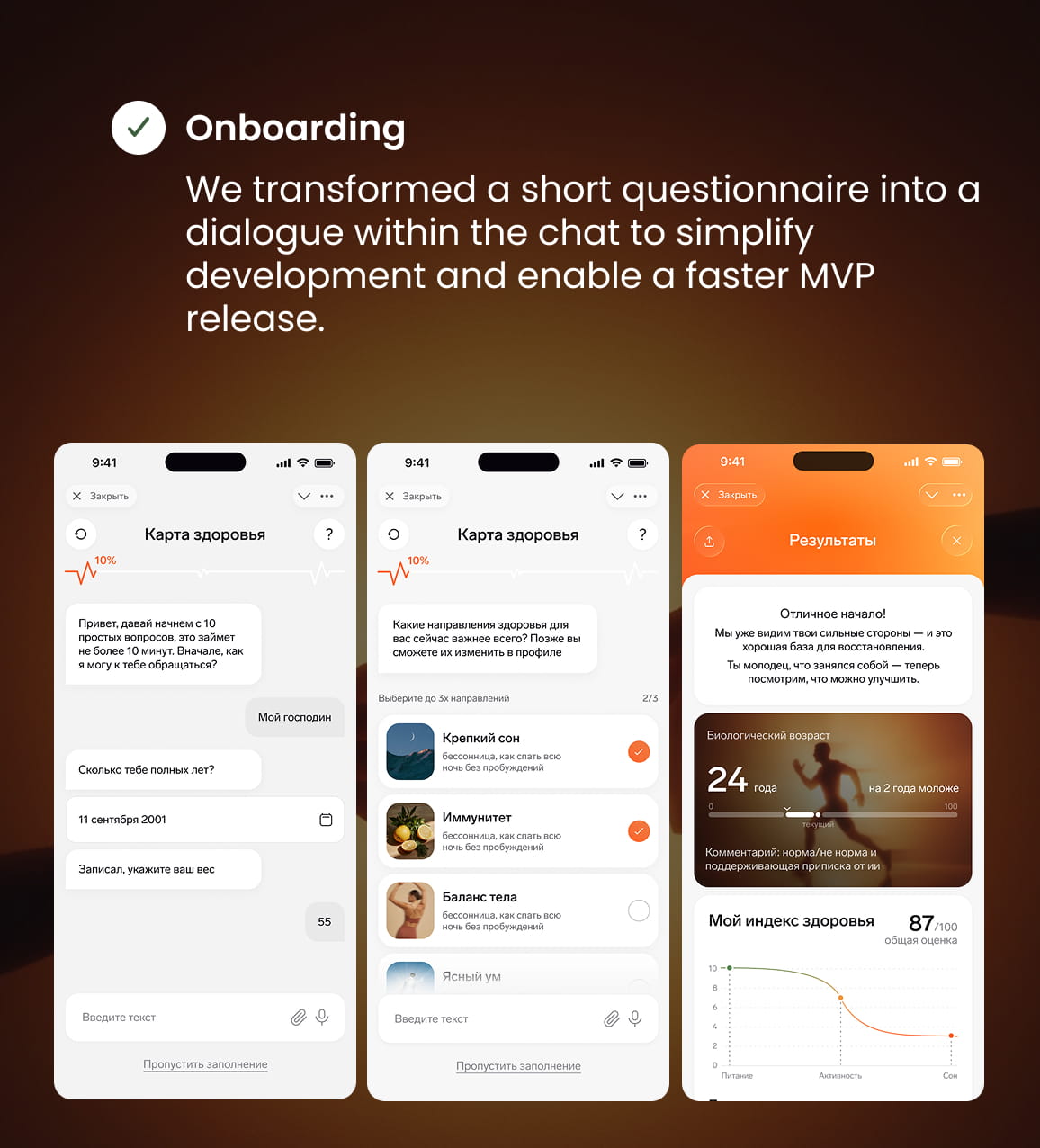
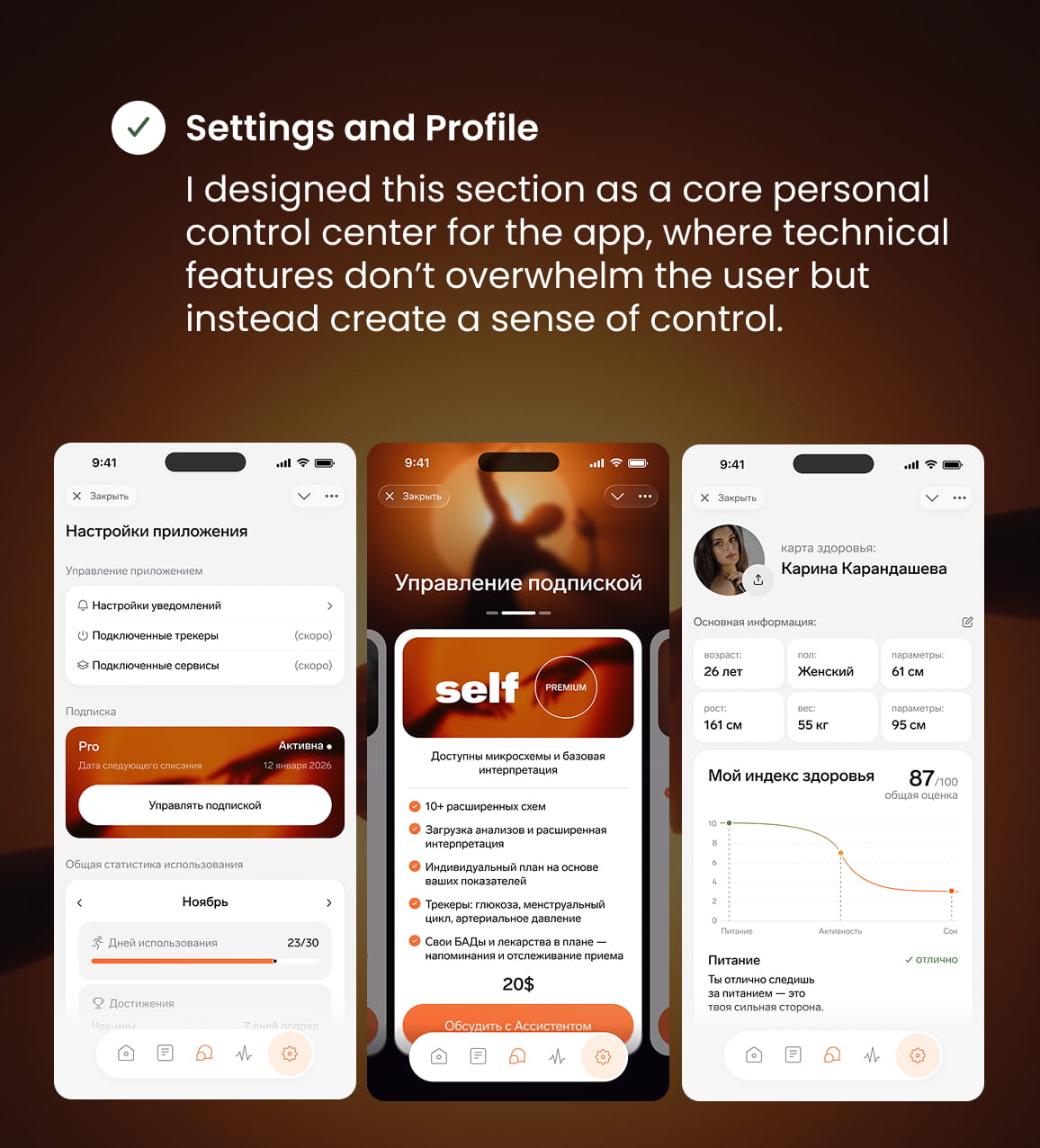
I proposed something different — an interactive screen that shows only what the user chose, plus an AI nudge when something needs attention. This matched the insight from interviews: the app should feel supportive, not overwhelming. I showed both versions side by side and the team agreed.
I proposed something different — an interactive screen that shows only what the user chose, plus an AI nudge when something needs attention. This matched the insight from interviews: the app should feel supportive, not overwhelming. I showed both versions side by side and the team agreed.
I proposed something different — an interactive screen that shows only what the user chose, plus an AI nudge when something needs attention. This matched the insight from interviews: the app should feel supportive, not overwhelming. I showed both versions side by side and the team agreed.
Design system
Design system
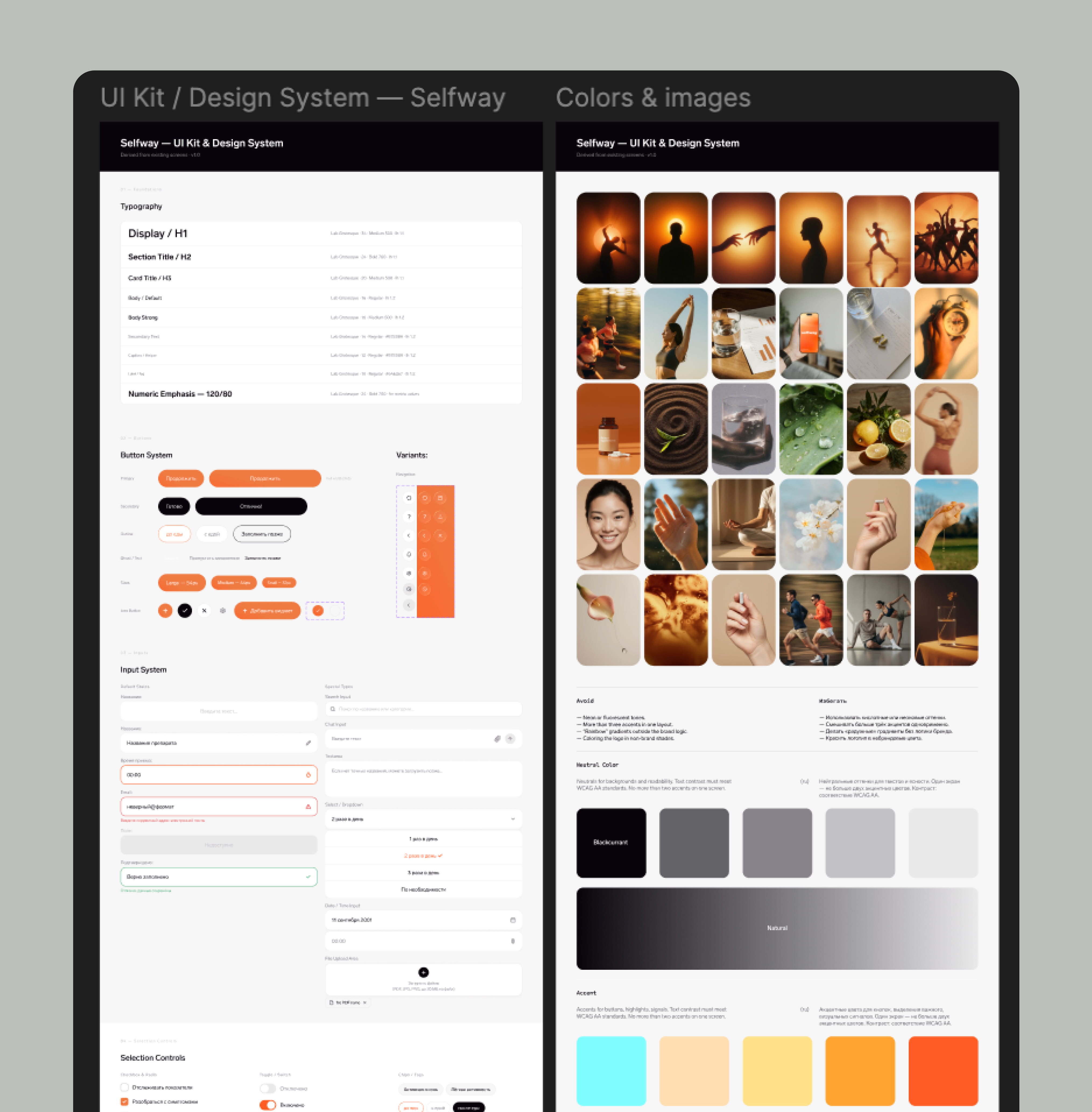
Took a brandbook with core elements — colors, typography, tone of voice — and built a full design system around it: components, tokens, variants, states, and documented usage guidelines.
Took a brandbook with core elements — colors, typography, tone of voice — and built a full design system around it: components, tokens, variants, states, and documented usage guidelines.
Developers noted that components were well-structured and documentation was clear — handoff went through without revisions or lengthy back-and-forth.
Developers noted that components were well-structured and documentation was clear — handoff went through without revisions or lengthy back-and-forth.
App screens
App screens

What's next?
What's next?
If you liked what you saw — I'd love to work with you.
Drop me a message, I'm open to new projects.
If you liked what you saw — I'd love to work with you. Drop me a message, I'm open to new projects.
Violetta,
Product Designer